Timber, Stone or Pavers Underfoot? Choose a Patio Surface by Feel and Upkeep
Compare a timber, stone or pavers patio by appearance, feel and upkeep, so you can choose a surface that suits your garden and habits.
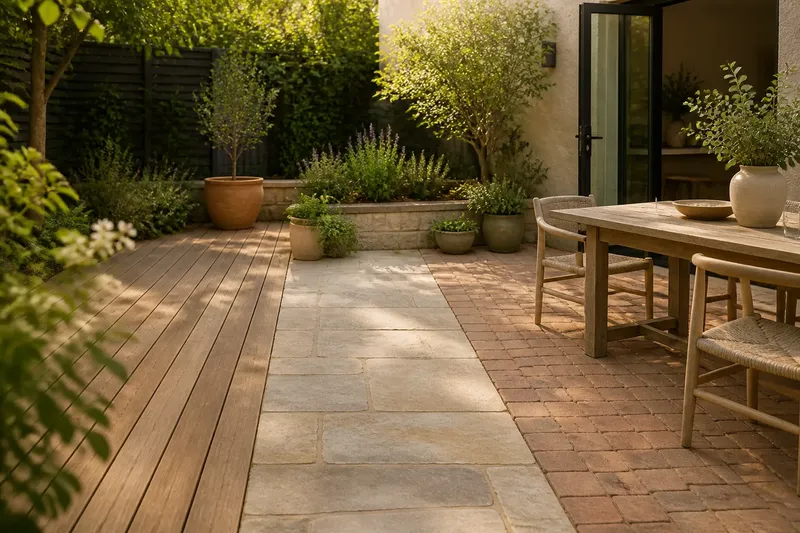
A timber, stone or pavers patio can look inviting in a sample rack and feel quite different beneath bare feet or a chair. The useful comparison is not simply which material looks best, but what kind of surface you want to live with: warm or cool, visually varied or orderly, and easy to keep tidy or comfortable with signs of weather.
Each option can work well in the right setting. Timber brings grain and a softer visual character; natural stone offers variation shaped by the material itself; and concrete or clay pavers give you a defined pattern made from separate units. Seeing those differences clearly makes the choice less about a trend and more about the daily experience of your patio.
What does each patio surface feel like?
Timber tends to read as warm and familiar, especially beside planting, painted timber joinery or a timber-clad house. Its boards create long lines that can make a compact patio feel more spacious, although the visible grain and gaps mean it never looks like one uninterrupted plane.
Underfoot, timber usually feels less hard than masonry, but boards can become rough, damp or slippery depending on their finish and exposure. A sample is useful, though it cannot show how the whole deck will feel after weathering or how its direction will shape the space.
Stone is a broad category rather than one uniform finish. A sawn limestone slab may look calm and regular, while cleft stone has a textured face and more variation in colour and edge; the particular stone matters more than the label alone.
That variation can make stone sit naturally beside established planting and older buildings. It can also make a patio feel visually busier, particularly where the stone has strong veining or where several tones appear together. Touch the face, look at the edge and compare pieces in daylight, rather than judging a small polished sample alone.
Pavers are individual units, commonly made from concrete or clay, laid in a chosen arrangement. Their repeating joints make the pattern legible, which can suit a crisp, planned garden or connect the patio to a path made from the same units.
The feel depends on the paver’s surface and edge. Some are smooth and even; others have a textured face that softens their manufactured regularity. Because joints remain visible, pavers tend to give a more articulated appearance than a large slab, even when the colours are restrained.
How does the material shape the look of a garden?
Start with the view from indoors. If the patio is seen through a broad set of doors, its colour and pattern become part of the room’s outlook. Timber can echo interior boards or garden fencing, stone can introduce a quieter mineral tone, and pavers can reinforce a deliberate grid.
Then consider what surrounds the surface. Loose, abundant planting often sits comfortably against stone with natural variation, while clipped beds and simple borders can make regular pavers feel intentional. Timber can bridge the two, but its direction and colour should relate to nearby structures rather than competing with them.
Colour is not a minor detail. Pale surfaces may make shade and leaf litter conspicuous; darker ones can show dust, pollen or water marks in a different way. Look at the material beside the actual soil, foliage and exterior wall, since those neighbouring colours affect how warm or cool it appears.
Scale matters too. A large-format slab can make a small patio feel calmer by reducing the number of joints, but a very large unit may be awkward around an irregular boundary. Smaller pavers create more joints and a stronger pattern; boards create long lines that can draw the eye towards a door, view or garden feature.
What upkeep does each surface invite?
Upkeep is partly a material question and partly a question of what you notice. If you enjoy sweeping away leaves and tending a surface, routine care may feel like a small extension of gardening. If fallen petals, dust or weathering quickly bother you, choose a finish whose ordinary appearance you can accept between clean-ups.
Timber may need periodic attention to retain the finish you prefer. Depending on its type and coating, care can include brushing away debris, washing gently and renewing a surface treatment when the maker’s directions call for it. Some owners like timber’s gradual colour change; others would rather maintain a more consistent appearance.
Stone generally asks for regular removal of leaves and dirt, with cleaning suited to the particular stone and finish. A rough face can hold soil or organic debris more readily than a smoother one. Aggressive scrubbing or an unsuitable cleaner may affect the surface, so use product guidance appropriate to the material rather than assuming every stone can be treated alike.
Pavers have joints as well as faces. Those joints can collect seeds, soil or moss, especially where the patio stays shaded and damp. Occasional sweeping and selective joint care may be enough for some settings, while a neat, weed-free appearance can demand closer attention.
For any of the three, the product label, manufacturer’s care instructions and local requirements should guide choices about coatings, cleaners, installation and drainage. The useful point is not to seek a maintenance-free surface, but to understand which visible changes you are willing to live with and which routine tasks suit you.
Which surface suits the way you use the patio?
Think about the patio’s most common moments rather than an idealised occasion. A place for quiet morning coffee has different demands from an area where children bring in muddy shoes or where dining chairs are moved often.
Timber can make a seating area feel less formal and visually connect it to a deck or garden structure. Stone can provide a grounded setting for substantial outdoor furniture and pots. Pavers can make it easier to define a dining zone through a clear pattern, without adding a separate border.
Furniture also changes how the surface behaves in use. Fine chair feet can catch in wide gaps or uneven joints, and pots can leave marks if water gathers beneath them. Before choosing, imagine the route from the door to the table and where chairs, planters and a barbecue will actually stand.
Say you have a shaded patio beside a kitchen door, with a dining table used through the warmer months and leaves falling from a nearby tree. If you favour a gentle, garden-like look and accept regular sweeping, timber could suit; if you want a stable mineral setting, compare textured stone; if a clear repeating layout matters most, look at pavers and consider how you will keep their joints tidy. The expected observable result is a choice that fits both the setting and the routine, rather than one made from a colour sample alone.
What is not worth the effort is trying to make one material imitate another perfectly. A paver printed to resemble timber will still have joints and a different touch; a uniform stone finish cannot reproduce the grain of boards. Choose the qualities the material genuinely offers.
What should you ask before choosing a patio surface?
Will timber become slippery?
Surface texture, shade, moisture and accumulated debris all affect how timber feels underfoot. Compare the intended finish in the conditions the patio actually faces, and keep leaves and dirt from building up.
Is natural stone always irregular?
No: stone can be sawn to a more consistent face and edge, or left with pronounced natural texture and variation. Look at several pieces together to judge the variation you will see across the patio.
Do pavers need more joint care?
They have visible joints, so seeds and debris can collect there, but the amount of attention depends on shade, drainage and the finish you want. Consider whether you are content with occasional growth or prefer a tidier joint line.
Can I judge a surface from a small sample?
A sample helps with colour and touch, but it cannot show the full pattern, joint rhythm or variation across a large area. Lay several pieces together in the garden if possible, and view them in both bright and overcast light.
How can you make the comparison fairly?
Put the options side by side in the place where they will be seen. Check them against the house, nearby paving and planting, then consider the surface at the time you are most likely to use it. A colour that looks balanced in a showroom may feel stark against shaded foliage or warm brick.
- Compare a grouping, not one piece. This reveals timber grain, stone variation and the repeating joints of pavers.
- Look at the face and the edge. Texture and edge treatment affect both appearance and the sense of finish.
- Consider the everyday view. Check how the patio reads from the kitchen, sitting room or garden entrance.
- Imagine routine cleaning. Decide whether sweeping joints, brushing boards or clearing debris from textured stone sounds manageable.
- Place furniture mentally or physically. Check where table legs, chair feet and heavy planters will meet joints or gaps.
- Notice the weathered look you can accept. Some materials change in appearance; decide whether that feels like character or a reason for regular treatment.
These checks are more useful than asking which material is universally best. They translate appearance into practical preferences: a calmer or more patterned view, a warmer or firmer feel, and a maintenance rhythm that suits the household.
Which choice is right for your setting?
Choose timber if its grain and warmth matter to you, and you are comfortable with the care and visible change that can accompany an exposed surface. Choose stone if you value a mineral character and can find a texture and degree of variation that work with the house and garden.
Choose pavers if you want a clear arrangement of separate units and are happy to account for their joints in the patio’s appearance and care. Within each category, compare actual finishes rather than relying on broad labels: species and treatment change timber, stone face and cut change stone, and colour and texture change pavers.
For a timber, stone or pavers patio, the strongest decision comes from matching the surface to the conditions you can see and the upkeep you are willing to do. A good choice need not stay visually untouched; it should remain pleasant to use as leaves fall, furniture moves and the garden changes around it.