A Path Sets the Pace of a Garden
Garden path design can make a route feel direct, leisurely or quietly exploratory by matching its shape, surface and destination to how you want to use it.
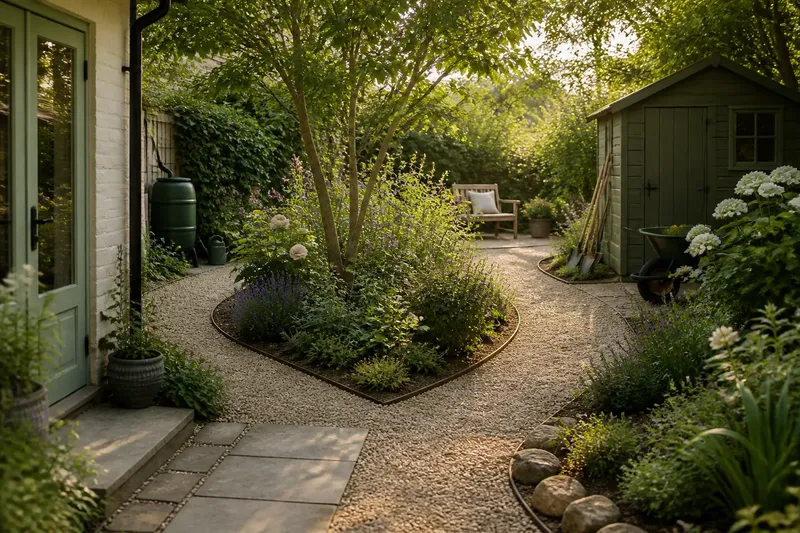
Garden path design changes whether you hurry to the shed, pause beside a border or wander towards a seat. Before choosing a curve or paving, decide what you want the route to make possible: efficient movement, a gradual reveal, or a reason to stop along the way.
A path is not simply a line drawn across a garden. Its direction, width, feel underfoot and relationship to what lies ahead all influence how people use the space. A useful plan begins with the journey itself, then takes shape over a week of observation and small decisions.
What should the route make you do?
Start by naming the path’s main job. A route to a compost bin may need to be direct and easy to use while carrying a bucket; a walk through a planted corner may invite slower movement. One path can serve both purposes, but a single, clear priority helps prevent design choices from pulling in opposite directions.
List the places people actually travel between: the back door, gate, water butt, shed, washing line, favourite chair or a patch that needs tending. Mark the most frequent journeys separately from occasional ones. That distinction helps reveal which route deserves the clearest connection and where a secondary branch could be more relaxed.
Notice who uses the garden and what they carry. A child cutting across to a play area, someone moving a tray outdoors and a gardener with a barrow may want different clearances and turning space. The route should suit ordinary use, not just look balanced from an upstairs window.
How can you map the path over a week?
Use the first part of a week to observe rather than design. On a simple sketch, mark doors, boundaries, planting beds, existing steps and the destinations you identified. Then note where people naturally walk, where feet cut across a lawn, and where a doorway or gate forces an awkward turn.
On another day, walk the garden at an ordinary pace and pay attention to what draws your eye. A flowering shrub, a change in level, a sunny patch or a view through foliage can make a natural pause point. A route that passes these features without making them feel like obstacles may feel more rewarding than one that follows the shortest line.
Say you often carry a watering can from the back door to pots beside a greenhouse, while a quiet bench sits behind a small tree. Imagine sketching the direct working route first, then adding a gentle branch that opens towards the bench. You would expect the daily trip to remain clear while the branch gives a separate reason to explore; the sketch lets you judge whether the two routes compete before moving soil or plants.
Near the end of the week, mark a proposed line on the ground with string, garden hose or removable markers. Walk it from both ends, carrying the kinds of items you normally take outside. Adjust places where you have to turn sharply, brush against plants or step away from the marked route to reach the destination.
When does a straight or curved route work better?
A straight path makes its destination easy to read. It often suits a practical journey, a narrow side passage or a route where people need to move directly between a door and an everyday destination. A straight line need not look severe: planting, a change in view or a small widening beside it can add interest without obscuring where it leads.
A curve slows the eye because its endpoint may arrive gradually. That can suit a leisurely walk or a route that reveals a garden feature in stages. But a curve that adds distance without offering a view, place to pause or useful connection can feel like an inconvenience, especially on a route used for chores.
Sometimes a slight bend is enough. It can soften a long approach, guide people around an established tree or keep a view of a work area out of immediate sight. The reason for the change in direction should be legible from the route; otherwise, walkers may simply cross the planting to take a shorter line.
What should the surface contribute?
Surface affects the character of a journey as well as its upkeep. Loose gravel can produce a distinct sound and a softer visual edge, while a firm, continuous surface may feel more suited to frequent trips or moving a trolley. Stepping stones make the gaps between them part of the experience, so check that their spacing feels natural for the people expected to use the path.
Consider how the route meets the ground around it. A clear edge can keep gravel within its path and make a border easier to maintain; a softer edge can help the route blend into informal planting. Changes in surface can signal a transition from a working approach to a quieter garden walk, but too many abrupt changes may interrupt the journey.
Think about wet weather, shade, fallen leaves and the route’s expected care. A surface that becomes slippery or difficult to keep clear may undermine the experience you intended. Follow the surface maker’s instructions and local requirements where they apply, and get qualified help if the work involves structural or other safety-critical changes.
How do path and destination work together?
The end of a path should reward the journey or make its purpose clear. At a shed, that might mean enough space to approach and turn; beside a bench, it might mean a view, shelter or a place to set down a cup. A route that ends at a blank boundary or squeezes people into a corner can feel unfinished, even if its line is attractive.
Check the destination from the direction people will arrive. A seat can face a planted view rather than the path, while a useful turning area can sit beside a gate without blocking its swing. If the route serves more than one destination, make each branch easy to recognise through its direction, setting or endpoint rather than a sign.
Not every route needs a special feature at its end. A direct path to a bin can do its job without a decorative marker, and adding ornaments along every stretch is rarely worth the effort. Put attention where it improves movement, comfort or the view.
What questions help you refine garden path design?
How wide should a garden path feel?
Choose enough clear space for the people and objects that use the route, including room to turn at its ends. A path intended for one person walking slowly may feel different from one used to pass another person or move garden equipment, so mark the proposed width and try the journey before committing.
Should a path lead straight to a garden seat?
A direct approach works if the seat is a frequent destination or the garden is compact. A more gradual route can make the seat feel tucked away, provided the turn is easy to follow and does not create an awkward detour for everyday use.
How can you discourage people from cutting across a lawn?
Look for the desire behind the shortcut: it may save time, avoid a tight turn or connect destinations more naturally. Bring the path closer to the line people already choose, or make its entry and destination easier to reach rather than relying on a barrier to change their behaviour.
Can one path serve both chores and a slow stroll?
It can if the practical route stays legible and the slower experience comes from its surroundings, a pause point or a branch. If the two uses conflict, separating a clear working line from a more leisurely route may make the garden easier to enjoy.
What should you review before building?
At the end of the week, return to the marked route and check it in both directions. Ask whether the destination is obvious, whether a curve earns its place and whether the line remains comfortable when carrying something. Move the markers if the route feels forced; changing a sketch is easier than correcting a path after installation.
- Does the route connect the destinations people use most often?
- Can someone follow it without brushing through planting or guessing where to turn?
- Does its shape suit the intended pace, rather than merely filling an empty space?
- Is the surface appropriate for routine use and the care you can give it?
- Does the endpoint provide room to arrive, pause or continue?
Garden path design works best when its choices reinforce the experience you want from that part of the garden. Review the route again after ordinary use begins: a newly planted bed or an overlooked shortcut may reveal a small adjustment that makes the journey feel more natural.